
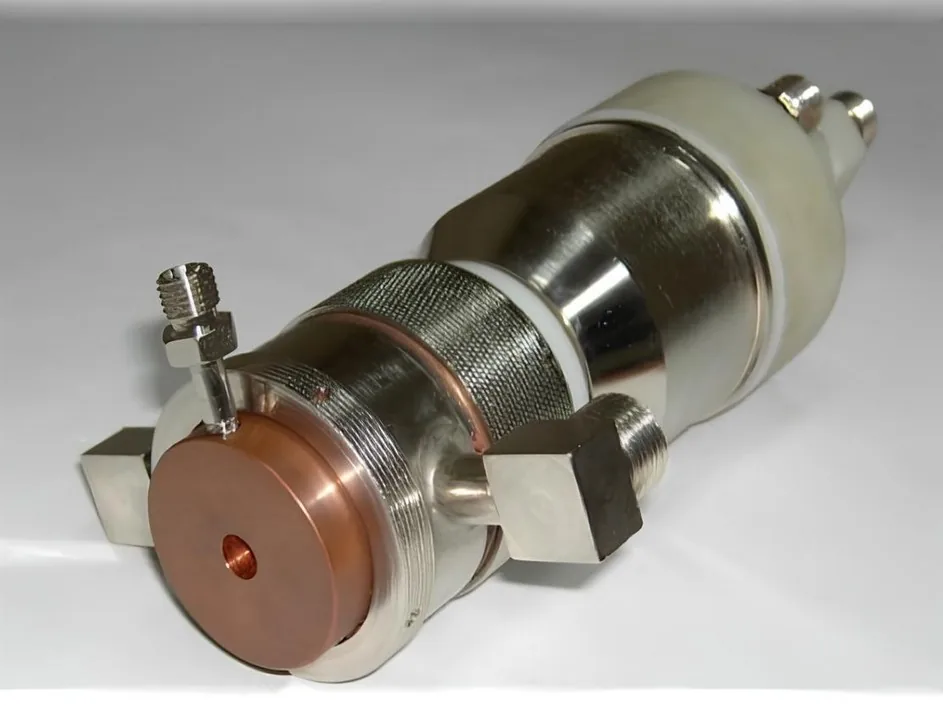
Description
Purpose and operating principle
The unit applies wear-resistant, corrosion-resistant, thermal barrier and other functional coatings by plasma spraying of powder materials based on metals, alloys, carbides, borides, oxides and cermets.
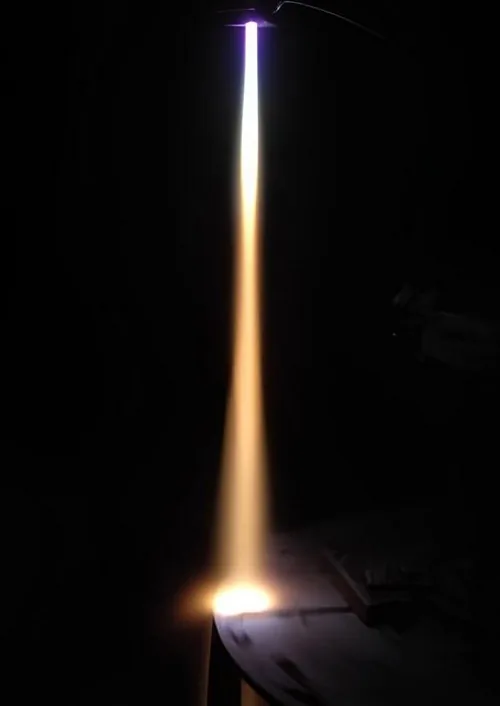
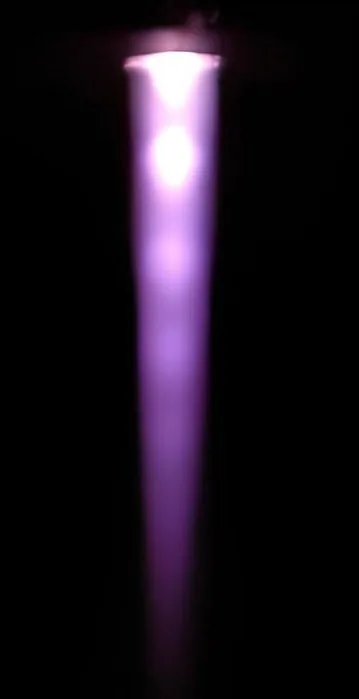
The torch design supports both subsonic and supersonic modes at Mach numbers M = 1.5–2.0 and above. This allows particle temperature and velocity to be controlled over a wide range, the process to be optimised for different classes of materials, and coatings with predefined properties to be produced.
The system runs on direct current, straight polarity (DCEN), with a three-electrode torch featuring a thermochemical cathode. This scheme allows air with 5–10 % of a combustible gas (methane or propane / propane-butane) to be used as the plasma-forming medium, producing plasma jets with a specific enthalpy of 12–30 MJ/kg. Since high-purity inert gases are not required, the process stays economical and technologically accessible while retaining high jet energy.
The oxidising and reducing conditions of the plasma are controlled by changing the air to combustible gas ratio, so the process can run in reducing, neutral or oxidising mode. This makes it possible to deposit high-quality coatings of refractory metals (W, Nb, Ta) and their alloys, oxygen-free and oxide ceramics (ZrO2–Y2O3, Cr2O3, WC, TaB2, TaSi2, MoSi2), cermets (WC–Co, Cr3C2–NiCr), as well as multilayer and composite metal-ceramic systems. Coating thickness ranges from 50 µm to 1–2 mm and above.
Key process parameters
| Parameter | Value |
|---|---|
| Plasma temperature, K | 3500–12000 |
| Plasma jet velocity, m/s | 1500–3000 |
| Sprayed particle velocity, m/s | 400–800 |
| Maximum spraying rate, kg/h | 8–20 |
| Electrical power, kW | 40–180 |
| Material utilisation ratio | 0.6–0.8 |
What the supersonic jet delivers
- particle velocity at the moment of impact with the substrate increases 3–4 times;
- particle kinetic energy rises 9–16 times, producing a step change in coating performance — adhesive and cohesive strength, wear resistance;
- coating porosity drops below 0.5–1 %.
The technology combines high plasma energy density, flexible control of the jet chemical potential and low operating cost, making the system an effective alternative to conventional argon plasma and HVOF processes.
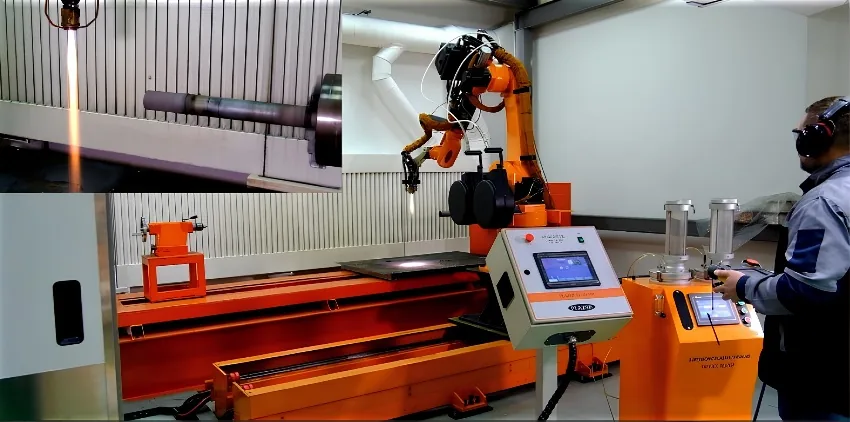
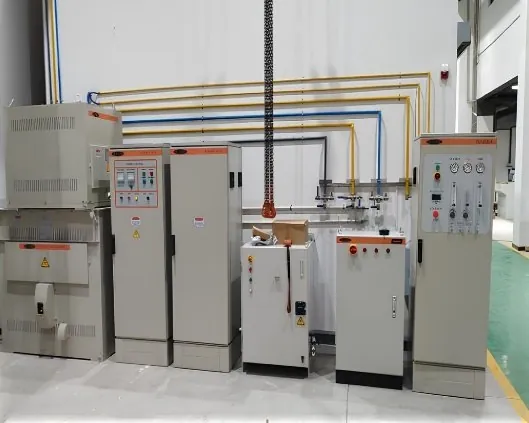
Main and auxiliary units
| Unit | Qty, pcs |
|---|---|
| Supersonic plasma torch | 1 |
| Dedicated power supply, operating current up to 300–350 A and voltage up to 540 V, for a supersonic torch of 60–120 (180) kW | 1 |
| Control system integrated with the gas preparation unit, with a programmable PLC | 1 |
| Mobile control console with a touch panel | 1 |
| Twin-hopper powder feeder, 5 l per hopper | 1 |
| Set of cables, accessories and spare parts | 1 |
Optional equipment (subject to agreement with the customer):
- spray booth with a CNC manipulator, or a robotic cell in an isolated enclosure;
- workpiece manipulator — single-axis or dual-axis positioner;
- torch cooling system;
- air compressor;
- gas cylinder rack for the combustible gas.
Main technical specifications
| Parameter | Value |
|---|---|
| Open-circuit voltage, V | 540 |
| Arc operating voltage, V | 200–550 |
| Arc operating current, A | 150–350 |
| Air pressure in the line, MPa | 0.8–2.5 |
| Main plasma gas (air) flow rate, Nm³/h | 10–35 |
| Combustible gas addition (methane, propane), Nm³/h | 0.1–3.0 |
| Cooling water flow rate, m³/h | 1.0 |
| Powder particle size, µm: ceramics, cermets metals, alloys |
10–30 15–40 |
| Maximum spraying rate, kg/h: ceramic powders metal powders |
8–18 15–20 |
| Powder utilisation ratio | 0.6–0.7 |