
Description
Purpose and operating principle
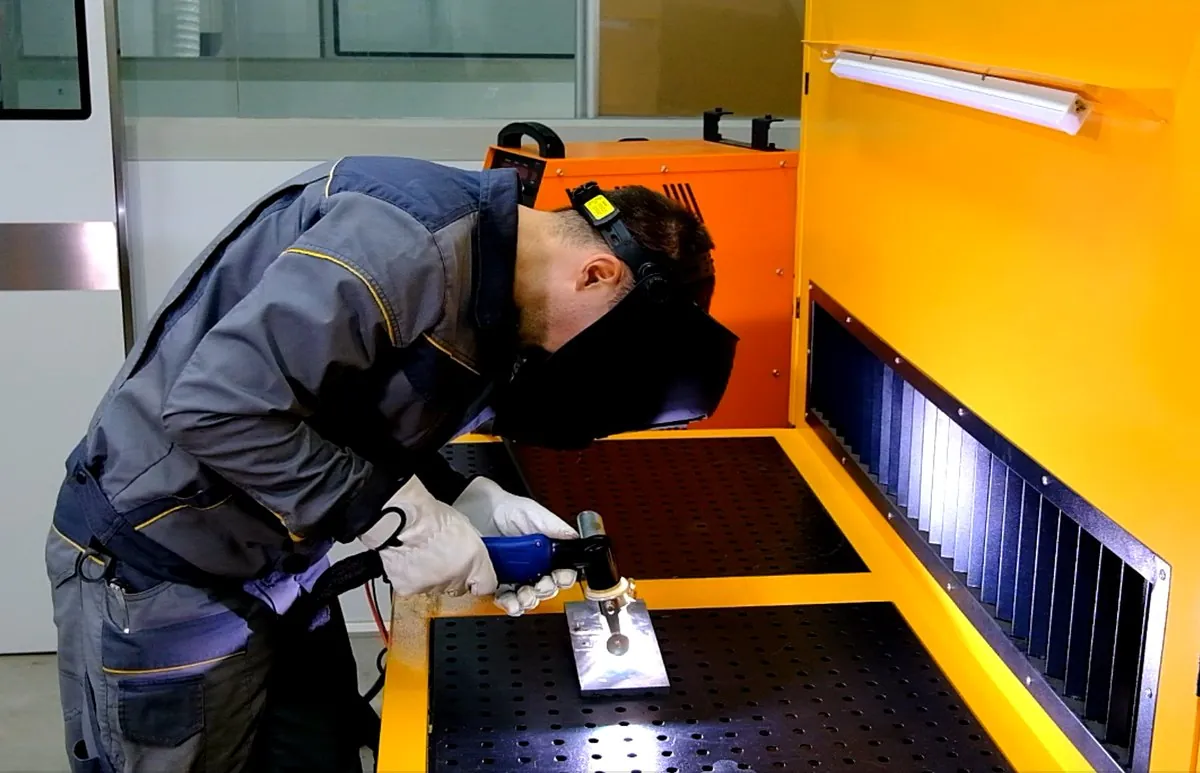
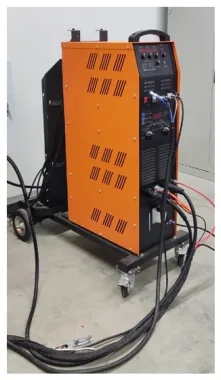
PL-PQ 5 is a compact mobile unit for manual plasma hardening with a transferred plasma arc in reverse polarity, designed for local surface strengthening of metal parts, assemblies and structures directly under production, installation or repair conditions. The unit combines high mobility, ease of operation and the ability to harden parts promptly without complex mechanised or robotic equipment. Depending on the grade of material and the processing modes, it produces a hardened layer with a hardness of 40–65 HRC and a depth of up to 3.5 mm.
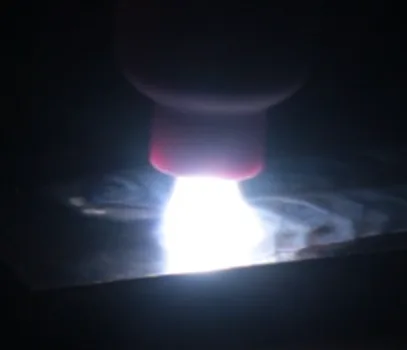
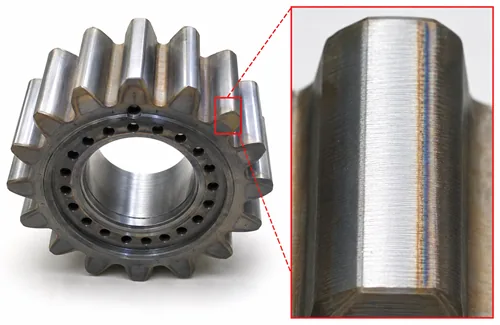
The unit performs plasma hardening of carbon, alloy and tool steels, as well as high-strength cast irons. The high energy concentration of the plasma arc provides intensive local heating of the surface layer with the formation of a fine-grained hardened structure, which increases wear resistance and extends the service life of parts by a factor of 2–5. The use of a plasma arc in reverse polarity delivers cathodic cleaning of the surface from oxide films and contamination directly during hardening, improves the thermal contact between the arc and the metal and increases the stability of the process.
Main process indicators
| Main process indicators | Value |
|---|---|
| Depth of the hardened layer, mm | 0.5-3.5 |
| Width of the hardening zone | 10-15 |
| Hardening speed, mm/s | 5-10 |
Features and advantages
The key features and advantages of the unit are:
- Compactness and mobility. The small dimensions of the unit make it possible to carry out plasma hardening directly at the place where the products are operated — in repair shops, on installation sites or under production conditions — without dismantling large parts
- High energy concentration of the plasma arc. The use of a constricted plasma arc produces a narrow heating zone 10–15 mm wide, which allows local strengthening of individual areas of a part with minimal thermal effect on the adjacent metal
- Cathodic surface cleaning. Operation in reverse polarity ensures effective removal of oxide films and surface contamination directly during hardening, improving the stability of the process and the quality of the hardened layer produced
- Ease of operation. The design of the unit does not require complex process tooling, it is easy to transport and quick to prepare for work
- Versatility of application. The unit is intended primarily for manual plasma hardening with simple guides or auxiliary process tooling that keeps the plasma torch in a stable position relative to the surface of the part. If required, the plasma torch can be mounted on mechanised devices or industrial robots.
Specification of the main and auxiliary units of the PL-PQ 5
| Units of the installation | Quantity, pcs. |
|---|---|
| Main: | |
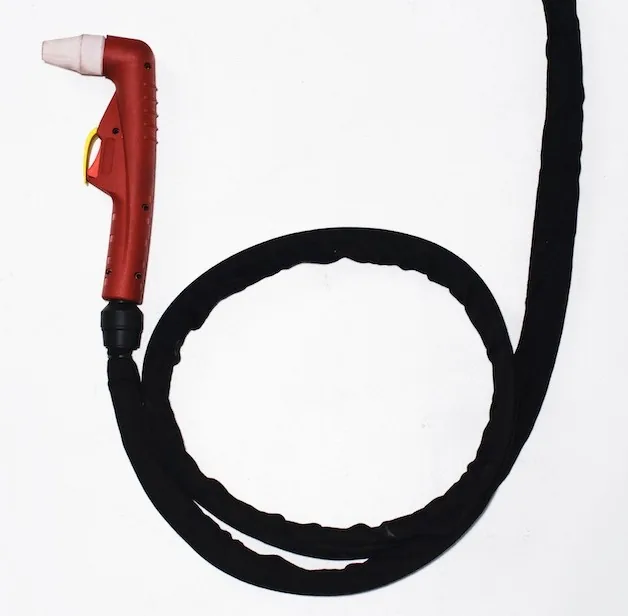
| Plasma torch for plasma hardening | 1 |
| Power source with an integrated unit for preparing and monitoring the working gases and a liquid cooling unit on a mobile trolley platform | 1 |
| Hose package set (power cables, gas and cooling hoses) with quick-release couplings | 1 |
| Gas fittings set (cylinder reducers, safety valves, gas valves, connecting hoses) | 1 |
| Spare parts kit (spare parts, consumable elements of the plasma torch — cathodes, nozzles, seals — and specialised tools) | 1 |
| Set of operating documentation (data sheet, operating manual) | 1 |
| Auxiliary options (as agreed with the customer): | |
| 1. Universal bracket/adapter for mounting the plasma torch on the flange of an industrial manipulator or on the arm of an anthropomorphic six-axis robot | — |
| 2. Specialised clamping tooling (positioner / rotator) for hardening shaft-type parts | — |
Main technical characteristics of the PL-PQ 5
| Parameter | Value |
|---|---|
| Plasma torch power, kW | 5 |
| Current control range, A | 50-200 |
| Operating voltage, V | 10-20 |
| Argon pressure, MPa | 0.2–0.6 |
| Argon consumption, l/min | 8-15 |
| Plasma torch cooling type | water |
| Coolant consumption, l/min | 3-6 |