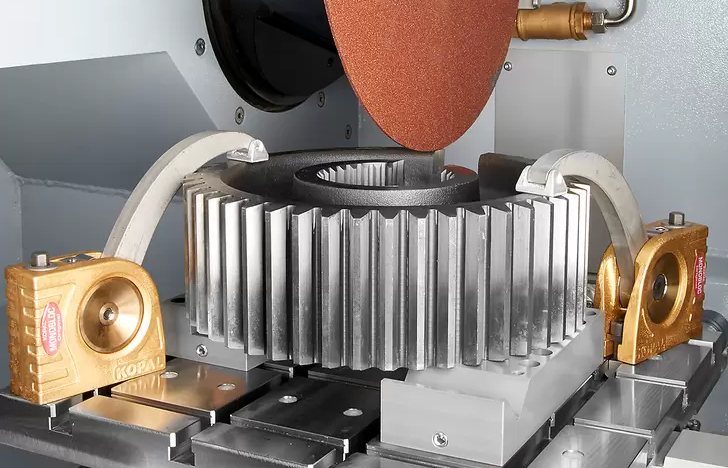
Precision Diamond Cutting of Metallographic Samples Cutting Separating a sample fragment with a diamond wheel while keeping the mechanically affected zone to a minimum. Feed rate is set in advance and held automatically, and the rigid base damps vibration — the cut comes out even, with no burn marks, cracks or structural deformation.…
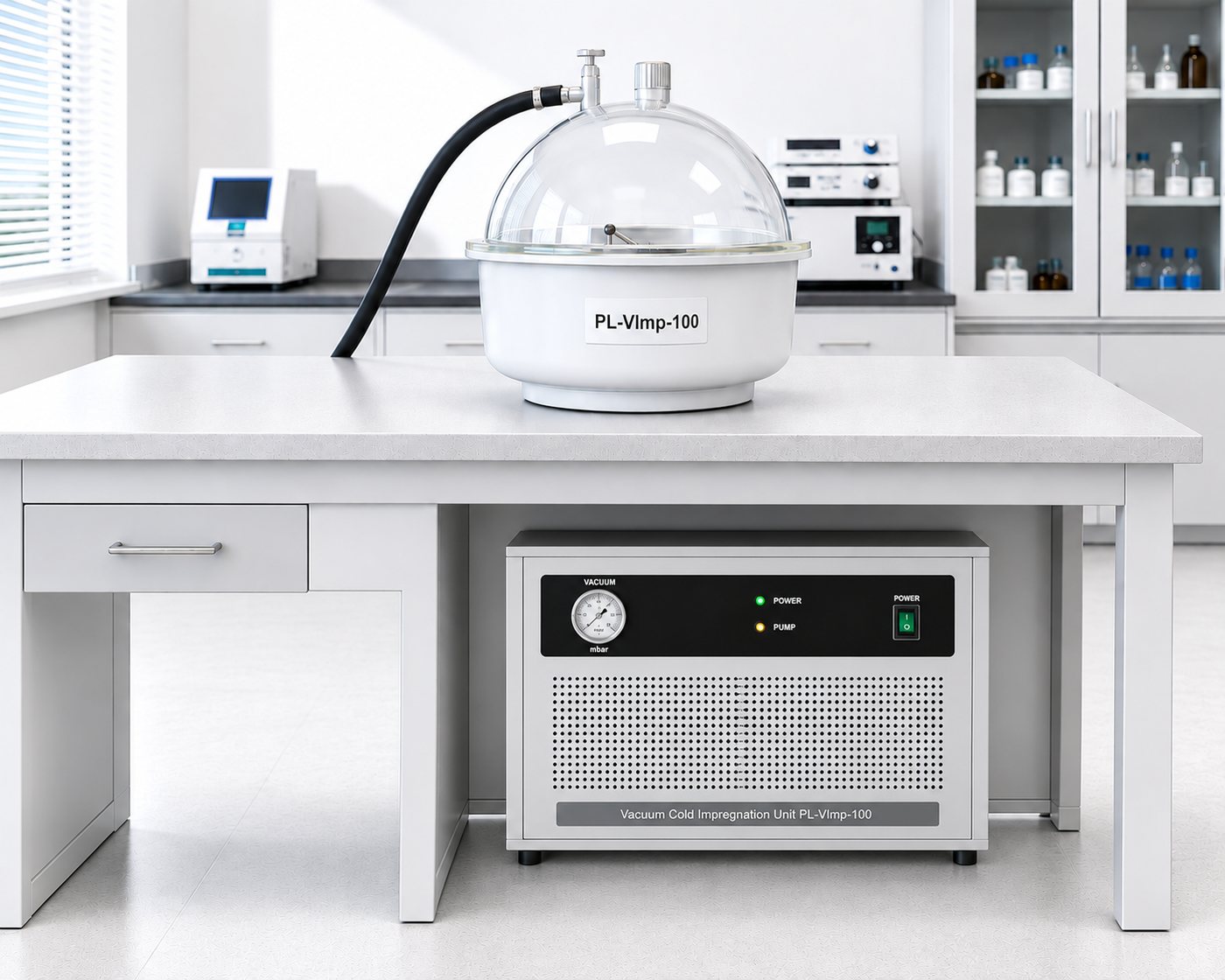
Hot and Cold Vacuum Mounting of Samples Mounting Embedding the sample in polymer or resin to give it a shape convenient for grinding, polishing and microscopy. The hot method — pressing at up to 160 °C with ±2 °C stability — is used for small, brittle and irregularly shaped samples. Cold vacuum casting runs below 100 mbar.…
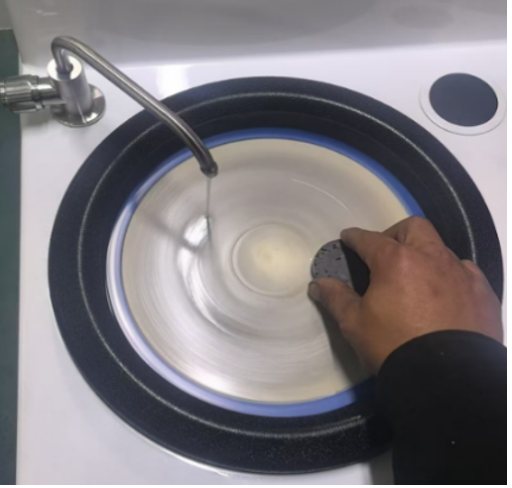
Automated Grinding and Polishing of Micro-Sections Grinding Sequential surface treatment of the sample: rough grinding, fine grinding, pre-polishing and final polishing. Rotation speed, processing time and clamping force are set by program and held automatically, so the result does not depend on operator skill.…
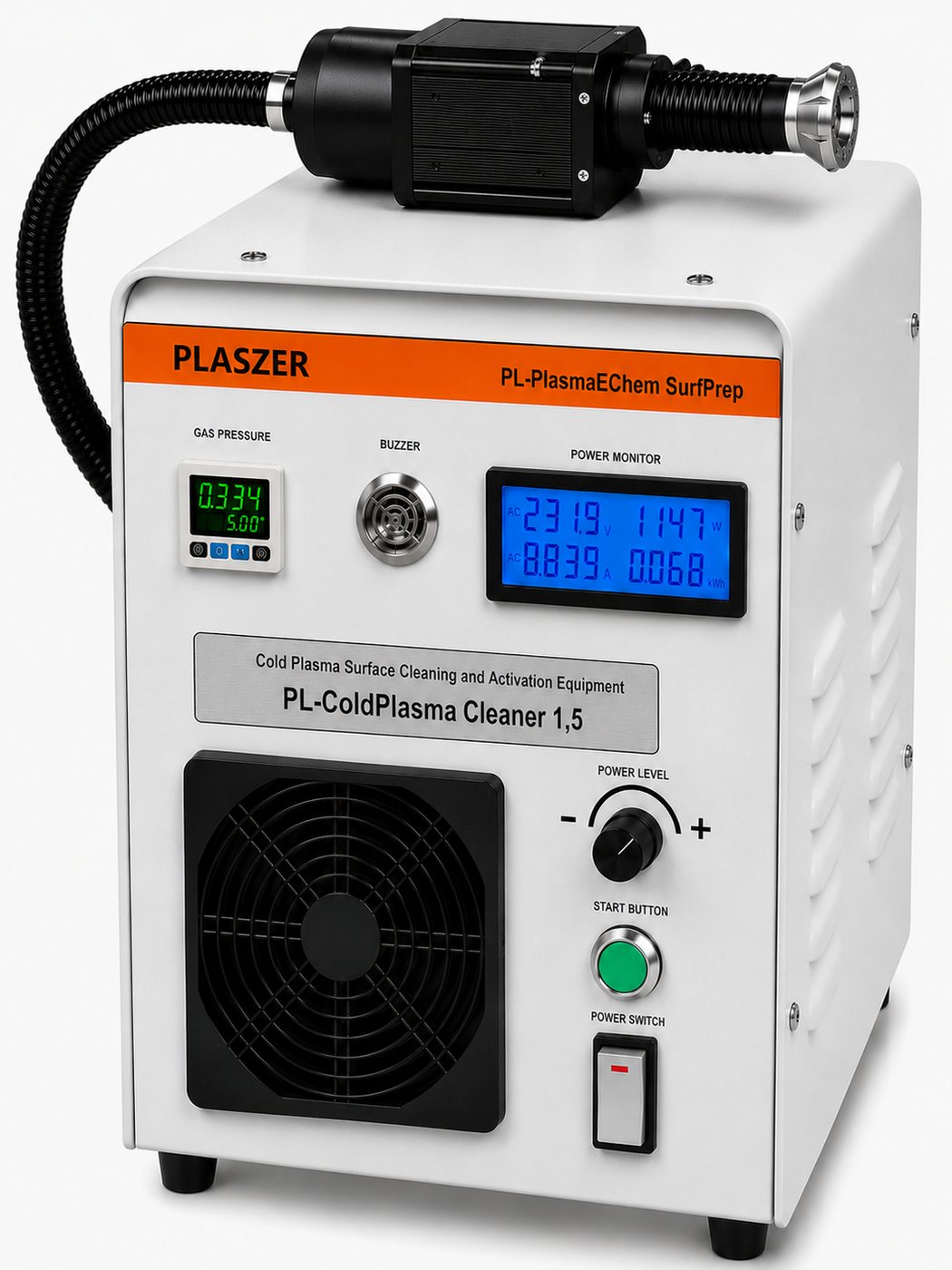
Plasma Cleaning and Surface Activation Surface preparation Treating the sample surface with atmospheric plasma — no vacuum chambers, no complex preparation. The plasma removes organic contamination and oxide films and activates the surface before the next operations. Working gases are air, argon, nitrogen or oxygen. Plasma voltage is 0.5–2.5 kV, power up to 1.…
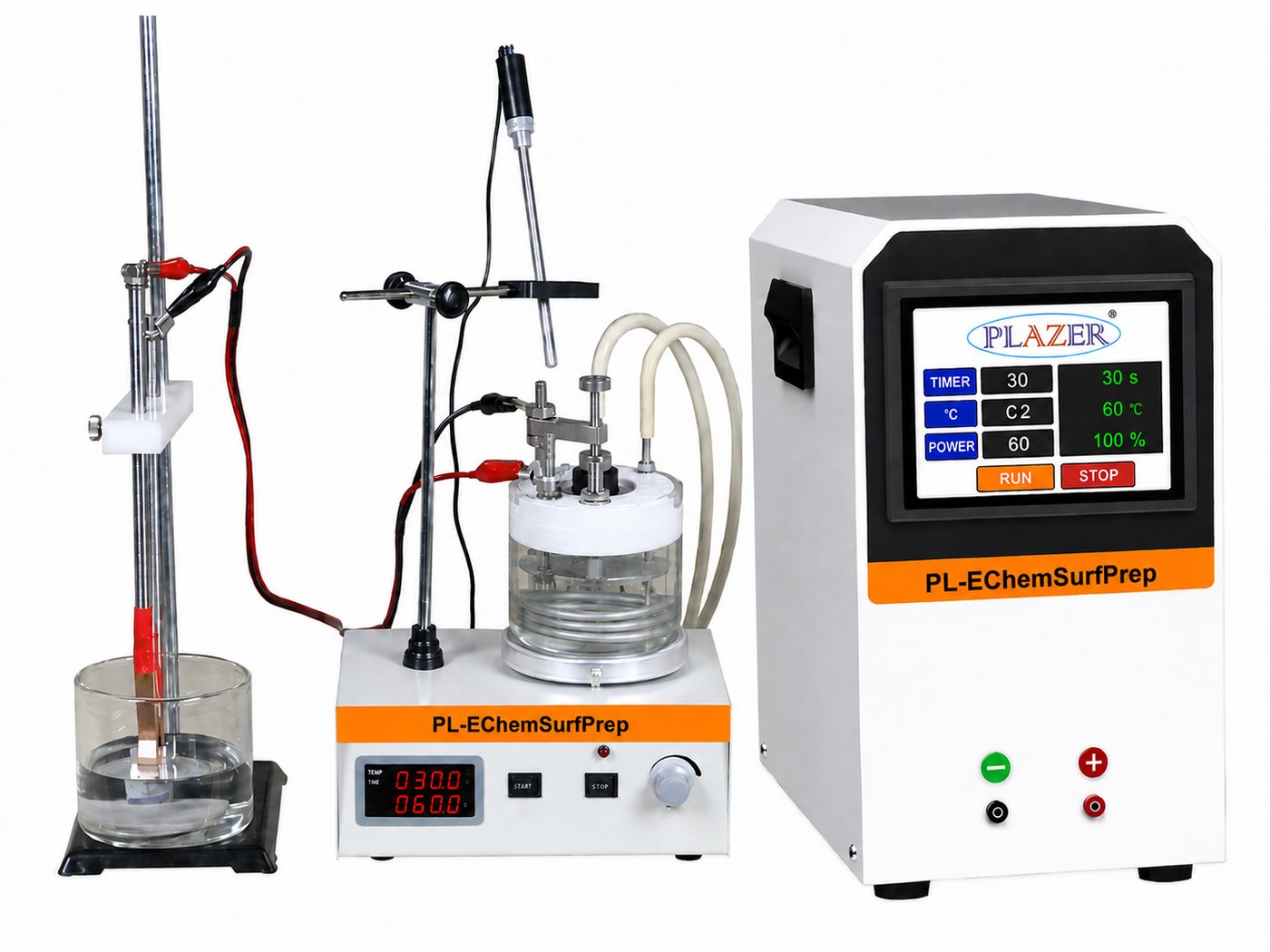
Electrochemical Polishing and Etching Surface preparation Removing a thin surface layer and revealing the microstructure by electrochemical means. Unlike mechanical polishing, this method leaves no cold work or deformed layer — the structure under the microscope is seen as it truly is. Working voltage is up to 15–20 V DC, maximum current up to 6–20 A, measurement accuracy 0.…
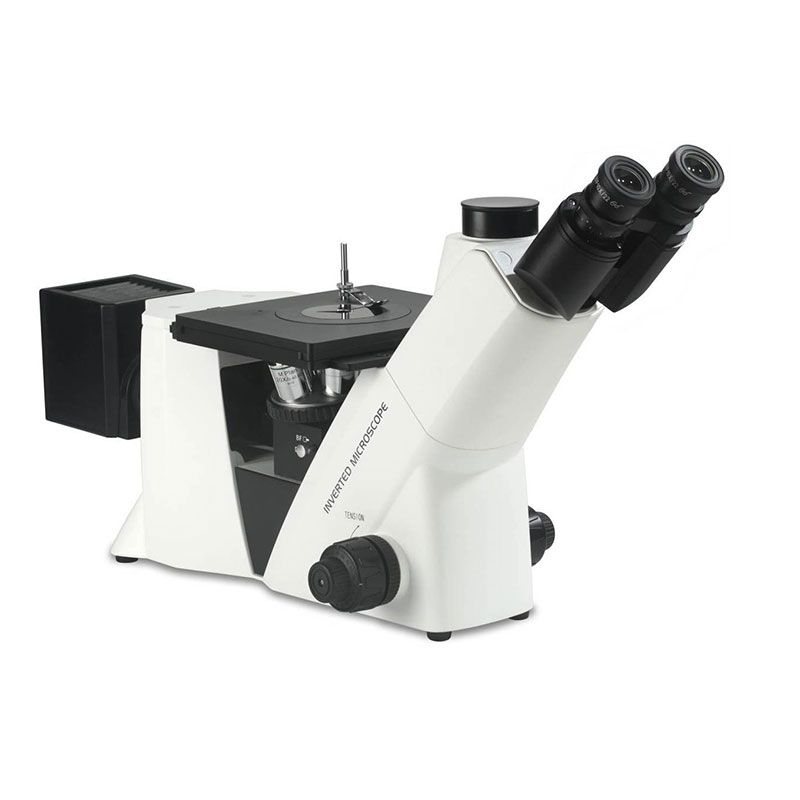
Optical-Digital Microstructure Analysis Analysis Examining material structure on an inverted metallographic microscope at 50–1000× magnification in bright field, with image capture by a digital camera of 5 MP or more. The software performs grain size measurement, linear measurements, phase area determination and basic image processing.…
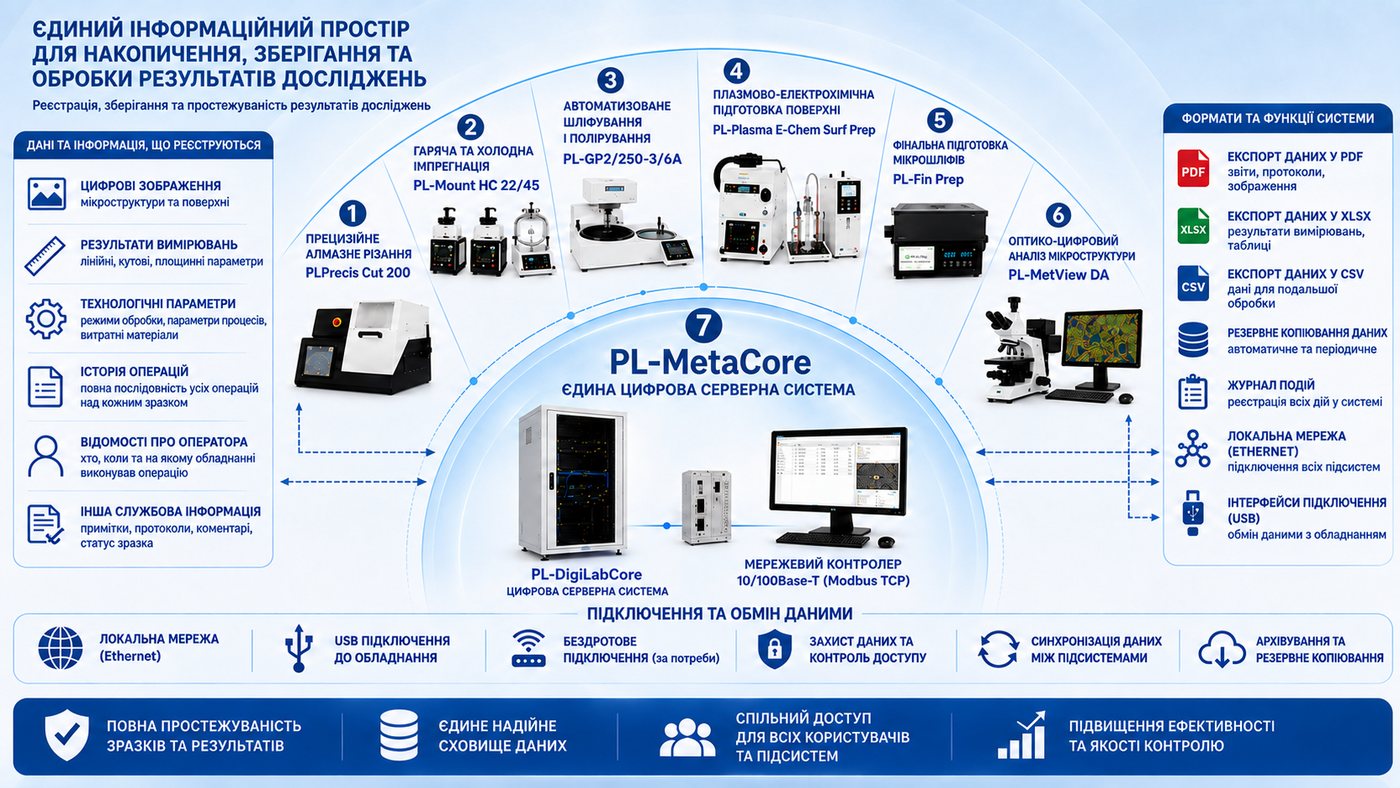
Digital Sample Passporting and End-to-End Research Records Digitalisation Every unit of the complex sends its process parameters to a shared database through a digital integration module. The sample receives a unique identifier at registration, and from then on the system records what happened to it: which operation, with which parameters, when and by whom.…