

Description
The PL-LT Vision W-AM laser-triangulation machine vision system is a hardware-software solution for adaptive control of robotic welding and metal 3D-printing processes: automatic weld seam tracking, and geometry control of beads and the part being built in additive manufacturing.
It maintains stable positioning of the welding tool relative to the seam and part surface in real time, automatically compensating for deviations during arc, plasma and laser welding, hybrid processes based on them, and additive hardfacing.
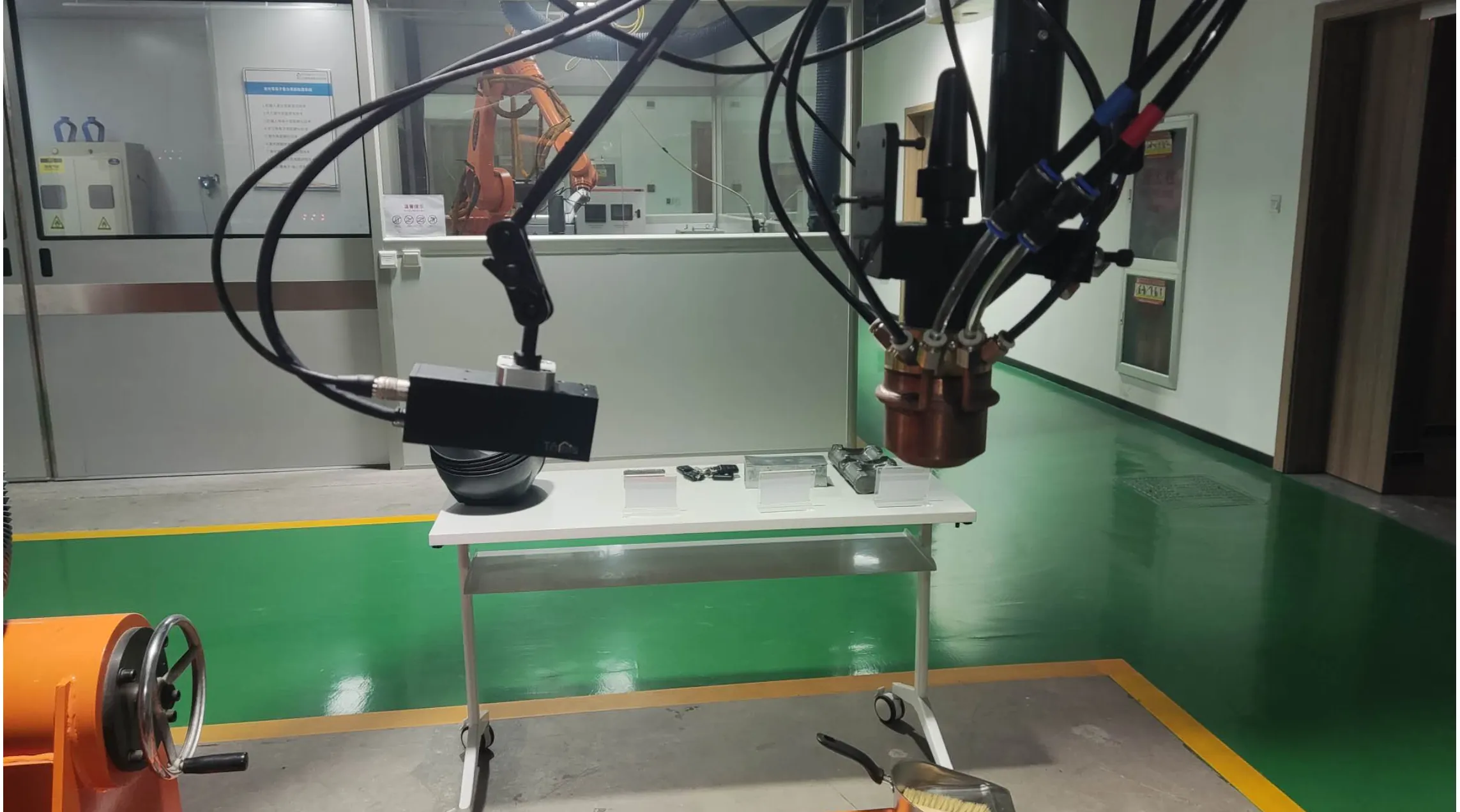
How it works
A laser mounted on the robot manipulator projects a thin line onto the part surface and the seam area. A high-resolution camera observes the laser projection at a set angle. Any change in the surface profile — a gap, a step, a height difference — shifts the line in the frame, and from that shift the system calculates the actual seam geometry.
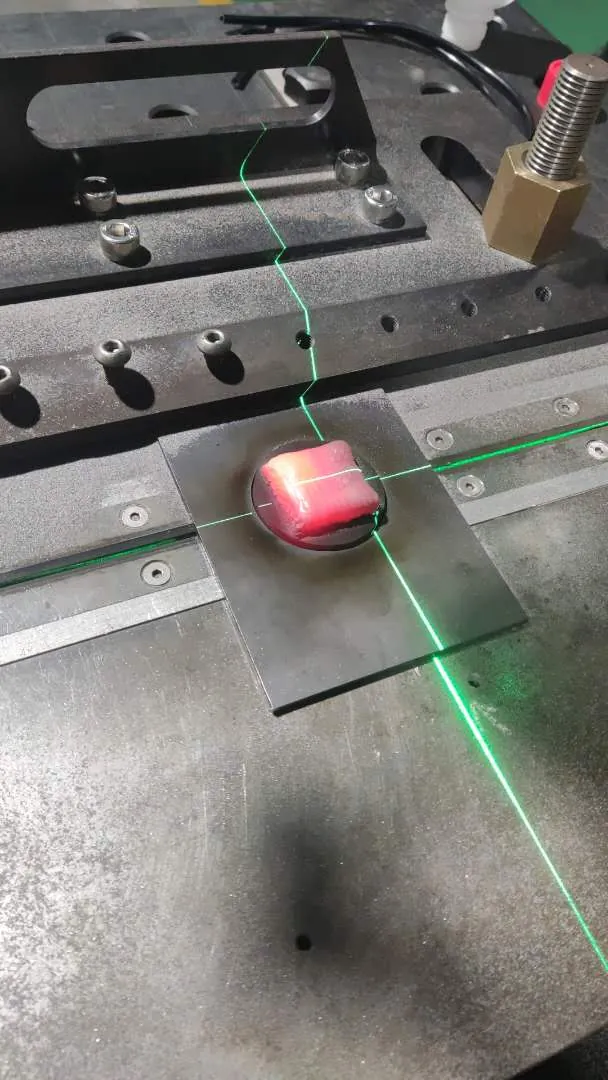
Geometry the system recognises
Using laser triangulation, the system determines:
- seam coordinates and deviation from the set path;
- changes in surface height and layer height;
- changes in seam, weld or bead width;
- the relief geometry of welds and deposited beads.
The image is processed in real time on the computing module, after which the edge coordinates are sent to the robot, which automatically corrects its position. This forms a closed adaptive control loop for the welding and hardfacing process.
System components
- computing module — on-board image processing, without streaming video to an external PC;
- high-precision camera with optics — telephoto lens with the field of view calculated for the specific task;
- line-projection laser — forms the measurement line on the part surface;
- optical filter set — narrow-band and neutral, protecting against arc glare;
- RS-485 communication module — sends coordinates to the robot or controller;
- dedicated software — detection, calibration and diagnostics algorithms.
The configuration is selected for the customer's task: working distance, field of view, optics type and communication protocol are defined at the design stage.
Advantages and practical results
- improves welding and hardfacing quality;
- reduces dependence on the operator;
- ensures stable part geometry;
- enables automatic control of part dimensions;
- lowers accuracy requirements for assembly and tooling;
- raises the level of production automation.
Key capabilities
- precision real-time geometric control;
- automatic seam tracking during motion;
- three-axis correction of robot position (X, Y, Z);
- maintaining a stable torch or nozzle height above the part;
- detecting seams with minimal or zero gap;
- automatic measurement of the geometry of layers, walls, grooves and complex contours;
- control of bead shape and overall part geometry during additive build-up;
- positioning accuracy — down to 0.1 mm.
Deviation compensation and process adaptation
- real-time compensation of geometric deviations of weld seams;
- automatic adaptation to changing gap, edge offset and increasing layer height;
- correction of the travel path and heat input parameters;
- minimising Z-axis error accumulation and keeping the part shape stable;
- lower accuracy requirements for assembly and tooling.
Robustness under welding and hardfacing conditions
- resistant to arc glare thanks to dedicated optical filters;
- stable operation under intense radiation and aerosol conditions.
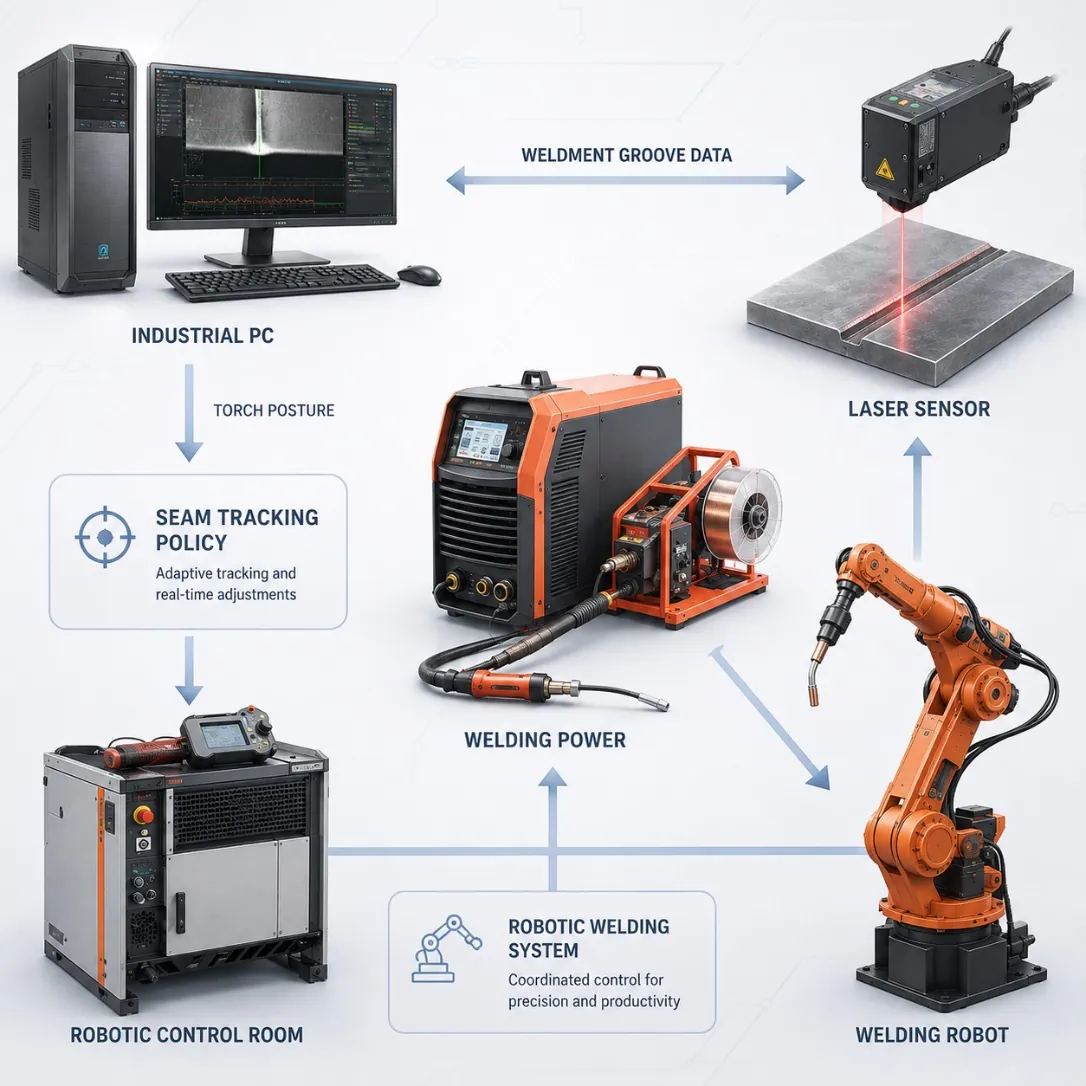
Integration
The system integrates with industrial robots, welding process control systems and other production interfaces, and adapts to any type of robot or CNC machine. It works equally well for MIG/MAG, TIG, plasma hardfacing, WAAM printing and other processes.
Production impact
- high repeatability of dimensions for welded structures and bulk parts;
- stable layer formation during additive hardfacing along complex spatial paths;
- fewer defects and less scrap;
- less dependence of the result on operator skill;
- higher accuracy and scalability of welded structures and additive production;
- lower accuracy requirements for assembly and tooling.
Customisation options
The system can be adapted to: any type of robot or CNC machine, different welding and hardfacing technologies, quality control systems, metal 3D printing, automatic part geometry scanning, integration with other industrial communication interfaces.
Development direction
Alongside the classic algorithm, a neural-network seam segmentation module is being developed — for complex and non-standard scenarios that are hard to cover with classic methods.
Technology used